
Self-employed mortgage in Dallas–Fort Worth: how tax returns, write-offs and 1099 income really count


Yes. If you own a business, freelance or earn 1099 income, you can get a mortgage in Dallas–Fort Worth. Most lenders want about two years of self-employment and qualify you on the net income on your tax returns, not your sales. That means big write-offs lower what you can borrow. A new business or one bank’s “no” isn’t the end: I shop your file with multiple lenders to find one that reads it fairly.
Key takeaways
- Lenders start from the profit on your filed returns, usually averaged over two years, not from your gross sales or deposits.
- Every dollar you write off is a dollar of income the lender usually can’t count. Some non-cash items, like depreciation, may be added back.
- 1099 freelancers and contractors are generally treated as self-employed: your Schedule C matters more than the 1099s themselves.
- Gather two years of complete returns with every schedule, a year-to-date profit and loss, and bank statements. Check your IRS transcripts early.
- One bank’s no is often not the final answer. As a broker I can take your file to a lender whose rules fit it.
Can a business owner get a mortgage in DFW?
Yes, and plenty do. Contractors in Denton, consultants in Plano and business owners in McKinney ask me the same thing: “I own a business, can I even get a mortgage?” The answer is yes. The harder question is how much income a lender will count, and that is where self-employed buyers get surprised.
A salaried buyer hands over pay stubs and a W-2, and the lender reads a number. When you work for yourself, there is no employer to vouch for your pay. So the lender uses the next best record: what you told the IRS. Your tax returns become your pay stubs. If you understand how an underwriter reads them, you can plan your purchase, and sometimes your next tax filing, around it.
If you are also buying your first home, my first-time home buyer guide for Dallas–Fort Worth covers the rest of the process.
How do lenders read self-employed income from tax returns?
Most lenders look for about two years of self-employment history and two years of filed tax returns. They take the income from those returns, make the adjustments their guidelines allow, and usually average the two years into a monthly figure. That monthly figure is what goes into your debt-to-income ratio.
Where they look depends on how your business is set up:
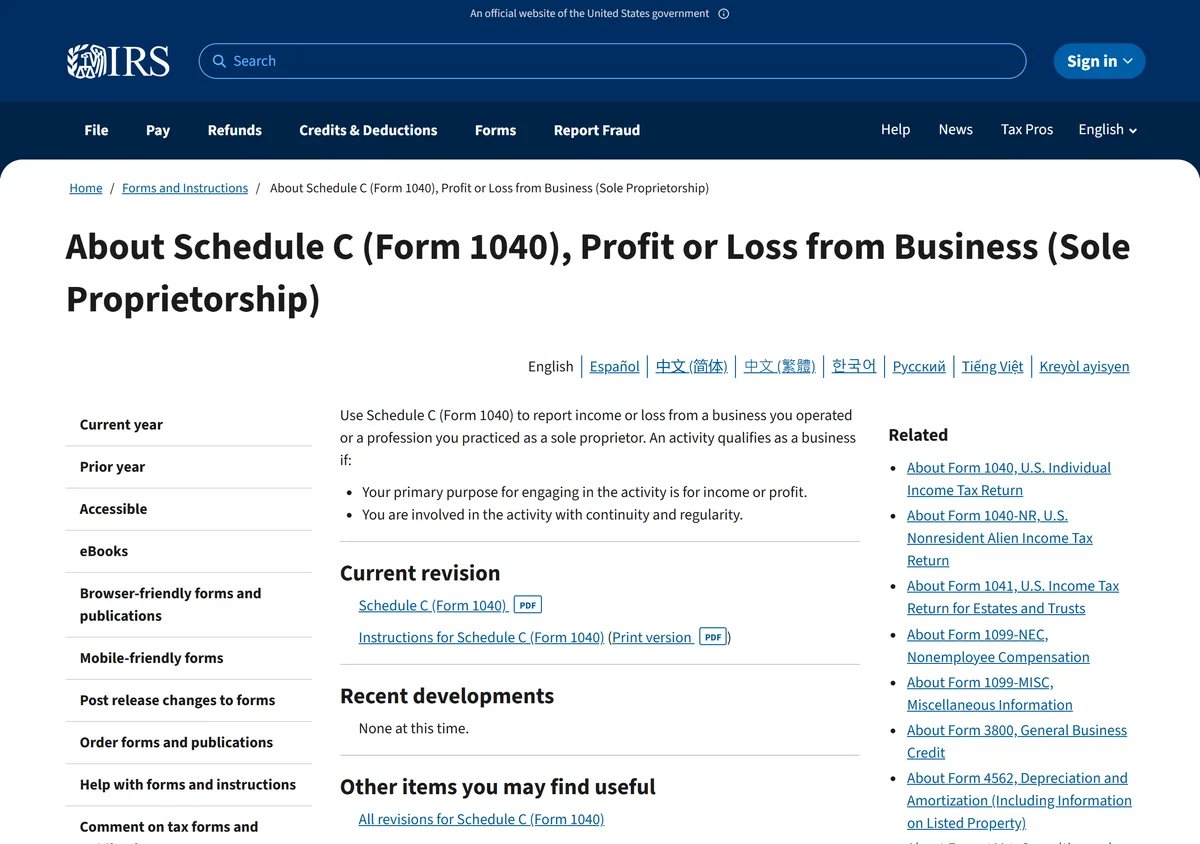
- Sole proprietor, single-member LLC or freelancer: Schedule C of your personal return (Form 1040). The line that matters is net profit, after all expenses.
- Partnership or multi-member LLC: your Schedule K-1, and often the business return too.
- S corporation: the W-2 wages your company pays you, plus your share of the profit on the K-1, with the business return to show the company can support it.
- C corporation: usually your W-2 wages, with the corporate return reviewed if you own a large share.
For a buyer in Irving with two years of returns, the trend matters as much as the average. If your profit went up from one year to the next, lenders are usually comfortable averaging the two. If it went down, many will use the lower year or ask why it dropped and whether the business has steadied. If you had one unusually strong year, expect questions about whether that work will continue.
Why do write-offs lower the amount I qualify for?
This is the question I hear most from business owners in Grapevine, Southlake and across Tarrant County: “I write off a lot of expenses. Will that hurt me?” Usually, yes. The same deductions that lower your tax bill lower your qualifying income. The lender sees the business you reported, not the business you run.
Here is a simple illustration with made-up round numbers, not a real client:
What the table shows
| Line on the return | Fewer write-offs | Heavy write-offs |
|---|---|---|
| Gross receipts (sales) | $200,000 | $200,000 |
| Business expenses claimed | $110,000 | $150,000 |
| Net profit on Schedule C | $90,000 | $50,000 |
| Monthly income a lender may start from (net profit ÷ 12) | $7,500 | about $4,167 |
How to read it: both owners brought in the same sales, but the second one claimed $40,000 more in expenses, so a lender starts from about $3,300 less income a month. Lower income means a lower loan amount or a smaller home. Your real figures depend on your returns and the lender’s adjustments.
Not every deduction counts against you the same way. Lenders commonly add back certain non-cash expenses, such as depreciation, because no money actually left your account. Some also treat one-time costs differently from expenses that repeat every year. What gets added back depends on the loan program and the lender, and I check each deduction on your actual return before I count it.
If you are planning to buy in the next year or two, talk with your tax preparer and with me before you file. I am not a tax advisor and I will never tell you to pay more tax than you owe. But you should know the trade-off: a smaller tax bill this year can mean a smaller loan next year.
Can I buy in Plano or Denton with 1099 income?
Yes. If you are paid on 1099s, as a freelancer, an independent contractor, a consultant or a gig worker, lenders generally treat you as self-employed. The 1099 shows what a client paid you; your Schedule C shows what you kept. The lender qualifies you on what you kept.
A software consultant working with companies around Legacy in Plano and a framing contractor in Denton look different on paper, but a lender asks the same things of both:
- How long have you done this kind of work, and how long on a 1099?
- Is the income steady, growing or shrinking?
- Do you rely on one client, and would losing that client change your income?
- What did it cost you to earn it: tools, truck, mileage, subcontractors, software?
If you recently moved from a W-2 job to 1099 work in the same field, tell me the date and what changed. Some lenders give weight to your history in the same line of work, even when the way you are paid changed. If you moved into a completely new field, the history clock usually starts over.
Contractors often ask which lender is “best” for them. Lenders read contractor files differently, especially around equipment, vehicles and seasonal income, which is why I compare more than one.
Not sure how your returns will read? Send me your situation and I’ll tell you what I’d look at first, with no credit pull.
Book 15 minutes with CraigI just started my company. Can I get a loan in Keller or McKinney?
Possibly, but plan for more questions. Most lenders look for about two years in business. Some may consider a shorter history when your current business already shows earnings on a filed return and you have a track record in the same field before it, for example a nurse who opened her own practice or a project manager who started his own remodeling company in Keller.
If your business is only months old and has no filed return yet, its income usually can’t carry the loan by itself. It doesn’t always mean waiting. I look at:
- Other income you can document today: a spouse’s or co-borrower’s wages, a part-time salary, or other steady income.
- Your prior work in the same field, which helps a lender see the new business as a continuation, not a gamble.
- Timing: when your next return will be filed, and whether buying after that filing gets you a better loan.
If you are looking at new construction in McKinney or Frisco, bring me the builder’s timeline before you sign. If your plan depends on a tax return you haven’t filed yet, we can line up the closing date with your paperwork.
Can I qualify with several incomes, like a salary plus a side business?
Yes. Lots of Dallas buyers have a W-2 job and a business on the side, own part of two companies, or pair a spouse’s salary with their own business income. A lender can count each source it can document and expects to continue. Each one gets read on its own rules, and I make sure nothing is counted twice, for example wages you pay yourself from your own S corporation and the same company’s profit.
What the table shows
| How you earn | What the lender usually reads | What to watch |
|---|---|---|
| W-2 salary plus a side business | Pay stubs and W-2s for the job; tax returns for the business | A side business showing a loss can reduce your qualifying income, even if the salary is strong. |
| 1099 freelance or contract work | Two years of personal returns with Schedule C | Expenses claimed lower the income counted; one large client can raise questions. |
| Owner of an S corporation or partnership | Personal returns, K-1s, and often the business returns | The business must show it can support the income you take out. |
| Business owner plus a co-borrower with wages | The co-borrower’s pay stubs and W-2s; your returns | Sometimes the wages alone can support the loan while the business builds its history. |
How to read it: find the row that looks like your household. The middle column is your gathering list; the right column is what I will ask about early, so it doesn’t surprise you in underwriting.
Tell me about every business you own a share of and any business debt you have personally guaranteed. Those can show up in the numbers, and it is better to account for them before I write your pre-approval.
What documents should I gather, and how do IRS transcripts work?
A self-employed file moves fast when it starts complete. Here is the list I give business owners:
- Two years of personal tax returns, every page and every schedule (Schedule C, E, K-1s, Schedule 1). Signed and filed, not drafts.
- Two years of business returns if you own a partnership or corporation.
- A year-to-date profit and loss statement, and sometimes a balance sheet, to show how this year is going.
- Recent bank statements for the accounts holding your down payment and closing money, personal and business.
- Proof the business is active: a business license, CPA letter, website or similar, as the lender asks.
- W-2s and pay stubs for any job, yours or a co-borrower’s.
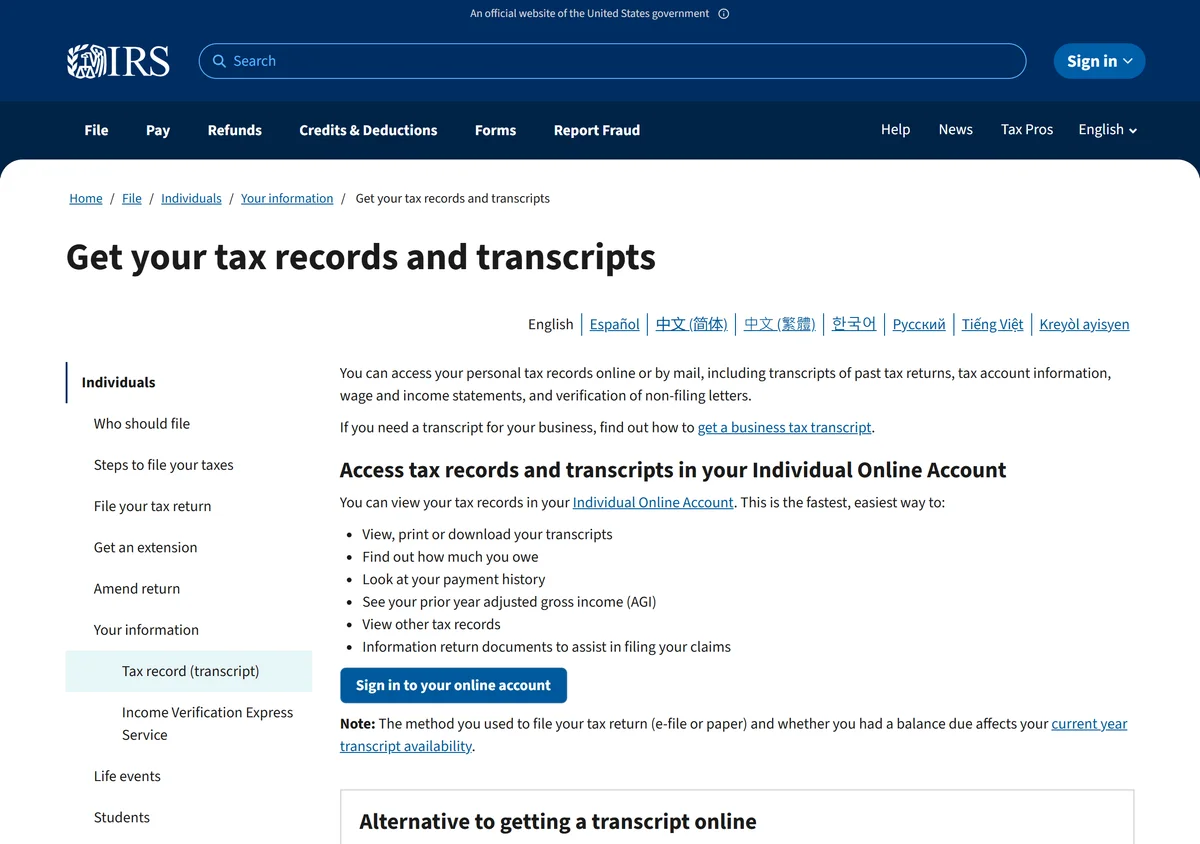
Lenders also verify your returns directly with the IRS. You will usually sign IRS Form 4506-C, which lets the lender request your tax transcripts. If what the IRS shows doesn’t match the copies you gave, for example because a return was amended or not yet processed, the file stalls. That is why I suggest checking your own transcripts first.
If you filed an extension, amended a return or owe the IRS on a payment plan, tell me up front. None of those automatically stop a loan, but each changes what a lender asks for. If you plan to pull money out of your business for the down payment, ask me before you move it. Lenders may want to see that the business can keep operating after the withdrawal.
What if one bank already said no?
A “no” from your bank tells you how that bank reads your file, not how every lender would. A bank with one menu of loans has one set of rules for self-employed income, and when your file doesn’t fit, it stops there.
I work differently. As a broker at Edge Home Finance, I can shop your loan with multiple lenders instead of fitting you into one bank’s menu. When a buyer brings me a denial or a pre-approval that came in too low, I ask three things: what income did they count, what did they leave out, and what document were they still waiting on. The answer usually shows whether another lender’s approach could change the result.
Some lenders also have alternative-documentation programs for self-employed borrowers whose tax returns don’t show the full picture. I can’t promise one will fit you. Once I see your file, I will tell you plainly whether any lender I work with fits it, what it would cost compared with a standard loan, and whether I’d recommend it. Then we pick the loan, whether that is a 30-year fixed mortgage for the most predictable payment, FHA loans with 3.5% down, VA loans if you have served, or jumbo loans for a higher-priced home in Frisco or Plano. You can compare all loan options ahead of our call.
Why business owners work with me
I’m Craig Scott, a Navy veteran and a mortgage broker at Edge Home Finance. My clients include teachers, physicians, veterans and business owners whose income doesn’t fit neatly into one bank’s box.:
- Multiple lenders, one point of contact. I compare lenders and show you every option, including the ones I don’t recommend, so you see why.
- Me, from first call to closing. You talk to me, not a call center. I answer my phone, including the night before closing.
- A weekly update to you and your agent until the file is clear to close.
- A real 3–5 year plan for the home, not just a rate. For a business owner, that means a payment that still works in a slow month.
- A pre-approval that holds. I review income, assets and credit before I write the letter, which matters most when your income takes reading.
Some files from my recent closings show how this plays out. In Fort Worth, a builder’s in-house lender couldn’t read a buyer’s active-duty and reservist pay. We could, and the buyer closed in just over three weeks with $25,000 in equity on day one. In Dallas, a buyer came in pre-approved elsewhere and wanted a second look; we restructured the deal and got him a better one. And for a business owner in Kansas City, we closed a home and a business in one building, living upstairs and running the business downstairs, with $0 down and the seller covering all closing costs.

My clients rate me 5.0 from 24 reviews. One of them, Troy T., put it this way: “If you are a physician, a military family, or anyone whose financial profile does not fit neatly into a conventional lending box, Craig Scott is the person you want in your corner.” You can read more about me and how I work.
How should I get started if I want to buy soon?
Start before you tour homes or sign with a builder. A solid mortgage pre-approval in Dallas–Fort Worth matters more for a self-employed buyer than anyone, because it settles the income question before a seller’s deadline is running.
- Book a 15-minute call. No credit pull. Tell me how you earn, when your business started and what any other lender said.
- Gather the documents above and check your IRS transcripts.
- Apply online in about ten minutes through my secure Edge Home Finance application. I review your returns and compare lenders.
- Get a pre-approval you can shop with, based on the income a lender will actually count.
Budget for the full payment, not just principal and interest. Many DFW cities run about 2% of a home’s value a year or more in property tax, so try your numbers in my payment calculator. Once you move in, file your homestead exemption with your county appraisal district. Most loans close in about 21–30 days once a file is ready; here is how fast you can close on a house in Dallas. Wherever you are buying, from Fort Worth to McKinney, see the DFW cities I serve, or book a call with me and bring your toughest income question.
Questions buyers ask Craig
How many years of tax returns do I need for a self-employed mortgage?
Do lenders use my gross sales or my net profit?
Will a drop in income last year hurt my application?
Can I use business funds for my down payment?
What is Form 4506-C?
Does Craig offer bank-statement loans?
Educational information, not a loan offer or commitment to lend. Programs, rates and guidelines change and depend on the lender and your full file; ask Craig for current terms. Craig Scott NMLS #2650008, Edge Home Finance LLC NMLS #891464. Equal Housing Opportunity.