What Credit Score Do You Need to Buy a House in Dallas–Fort Worth? 580, 600, 620 and 640 by Loan Type

It depends on the loan. Under HUD rules, FHA allows 3.5% down from a 580 score, and 500 to 579 with 10% down. Conventional loans commonly start around 620. VA sets no minimum score, but lenders do, and USDA files often look for about 640. Each lender adds its own rules on top, so a "no" from one bank is often not the final answer. I shop several lenders for your file.
Key takeaways
- 580 is the HUD line for an FHA loan with 3.5% down. From 500 to 579, FHA asks for 10% down, and fewer lenders take those files.
- 620 is where many lenders start for conventional loans, which can go as low as 3% down on some programs.
- VA sets no minimum score; the lender does. USDA's automated approval commonly looks for 640.
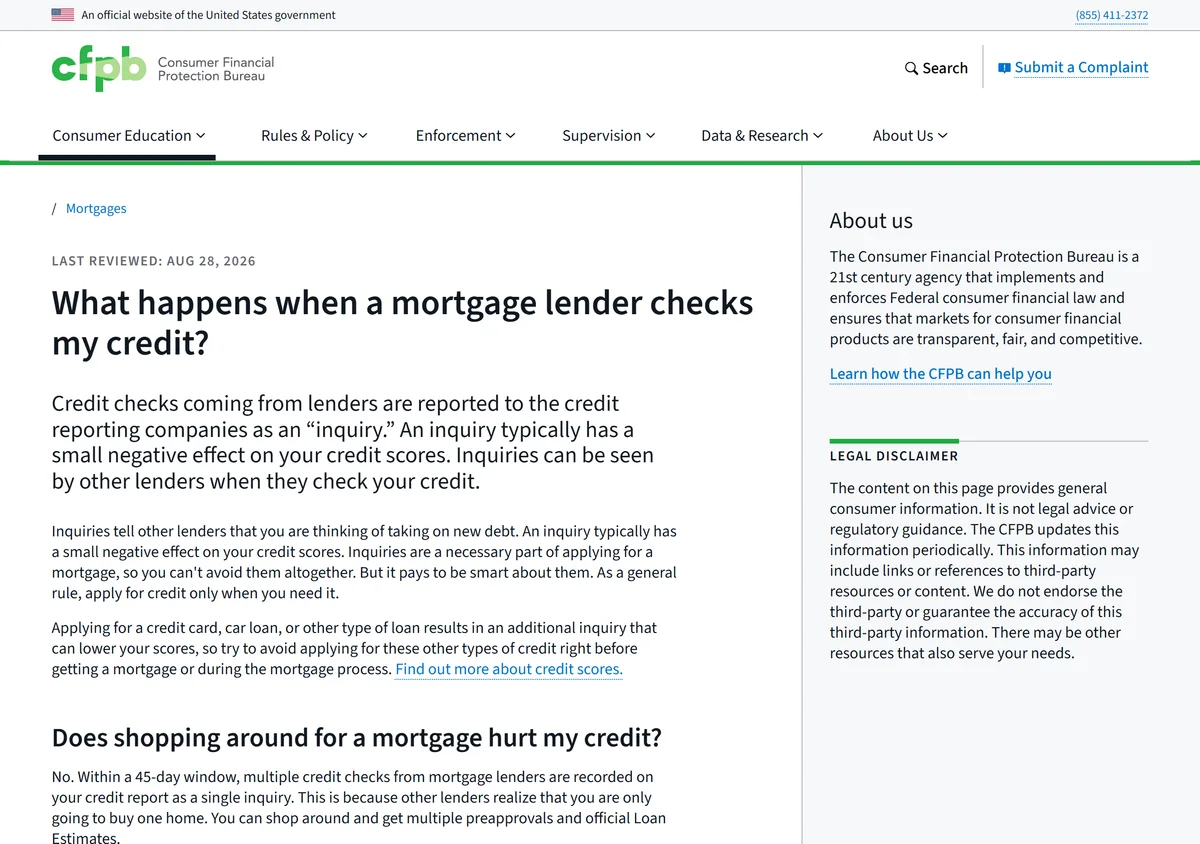
- Shopping lenders does not wreck your score. The CFPB says mortgage credit checks within 45 days count as one inquiry.
- Lenders set their own minimums, so I compare several of them before you take one bank's answer as final.
What credit score do you need for each loan type in Dallas–Fort Worth?
The question I hear most from first-time buyers in South Dallas, Duncanville, Carrollton and Richardson is some version of "Is my score good enough?" The answer has two layers. The first is the loan program's own rule, set by HUD, VA, USDA or the conventional market. The second is the lender's rule, often called an overlay, which can be stricter than the program.
That second layer is why two buyers with the same score can hear two different answers. One bank may want 640 for an FHA loan while another lender accepts the program minimum. As a broker at Edge Home Finance, I can take your file to the lender whose rules fit it, instead of fitting you into one bank's menu.
What the table shows
| Loan type | Score line you'll hear | Down payment | Worth knowing |
|---|---|---|---|
| FHA | 580 and up (HUD); 500–579 allowed with more down | 3.5% at 580+; 10% at 500–579 | Upfront and annual mortgage insurance; the home must meet FHA property standards |
| Conventional (for example a 30-year fixed) | Commonly 620 and up | From 3% on some programs; 1% with lender-paid assistance for income-qualified buyers | Mortgage insurance under 20% down; a higher score usually means a better price |
| VA | No VA minimum; each lender sets one | $0 for eligible borrowers | No PMI; for veterans, service members and eligible surviving spouses |
| USDA | Commonly 640 for automated approval; lower files may need manual review | $0 for eligible borrowers | The address and household income must both qualify |
How to read it: the score column is the line you will hear most often, not a promise. Lender rules vary and can change, so I check your actual score against the lenders I work with before you plan around any one number.
Can I buy a house in Dallas with a 580 credit score?
Yes, it is possible. A 580 score meets HUD's line for an FHA loan with 3.5% down. FHA was built for buyers like this: first-time buyers, people rebuilding credit and buyers with limited savings. Gift funds from family can also go toward the down payment.
The catch is that not every lender lends at the program minimum. Some set their FHA floor at 600, 620 or higher. At 580, which lender you pick matters more than at any other score. That is where shopping several lenders does the most good.
If your score is between 500 and 579, HUD still allows an FHA loan, but with at least 10% down. On a modest starter home in Duncanville or South Dallas, that is a real amount of cash, and fewer lenders take these files. If you are in that range, I usually run two plans side by side:
- Buy now with the larger down payment, if a lender will take the file and you still have money left for closing costs and moving.
- Wait a few months and work the score above 580, so 3.5% down becomes possible and more lenders compete for the loan.
Remember that FHA loans carry an upfront and an annual mortgage insurance premium, and the loan amount is capped by county. My payment calculator shows the mortgage insurance on an FHA loan, so you can see the monthly number before we talk.
What changes between 580, 600, 620 and 640?
These four numbers come up so often because they are common cut-off points. Here is what each one usually means in practice.
580
The FHA line for 3.5% down. Below it, you need 10% down on FHA, and most other loans are off the table for now.
600
Nothing magic happens at 600 under the FHA rules. It matters because many lenders set their own FHA minimum somewhere between 580 and 620. Moving from 585 to 605 can turn a short list of lenders into a longer one.
620
This is where many lenders start considering conventional loans. Being able to compare FHA and conventional on the same house is useful: conventional mortgage insurance can be removed later, while FHA mortgage insurance with less than 10% down usually stays for the life of the loan. Many FHA owners refinance to conventional later for that reason.
640
USDA's automated approval commonly looks for 640, and some lenders use it as their floor for other loans too. Above this point the question shifts from "Can I get approved?" to "What will it cost me?" Higher scores generally earn better pricing, especially on conventional loans.
None of these lines is the whole story. Lenders also look at your income, your debts compared with that income, your savings and how steady your work is. A 610 with steady income and low debt can be a stronger file than a 660 with maxed-out cards.
Can a VA or USDA loan work with a lower score?
For veterans, service members and eligible surviving spouses, a VA loan is often the first place I look. VA itself sets no minimum credit score. The lender reviews your credit and sets its own minimum, and those minimums differ from lender to lender. VA loans also have $0 down for eligible borrowers and no PMI.
I am a Navy veteran and have used my own VA loan more than once, so I know how often a VA buyer gets a "no" that is really one lender's rule. One of my closings was a Navy family on PCS orders. The builder's lender turned them down, and "no" from one lender didn't mean no everywhere. If you are a first-time VA buyer, my first-time VA loan guide for Dallas–Fort Worth walks through the whole process, and my VA vs conventional loan comparison shows when each one wins.
USDA loans are also $0 down, for homes in eligible rural and suburban areas. They are often closer to the city than people think: some outlying addresses around Denton may qualify. USDA's automated approval commonly looks for a 640 score. Below that, a file may need a manual review, which fewer lenders offer. Send me the address and I will check the USDA eligibility map for you.
Will checking with several lenders hurt my credit score?
Not in the way most people fear. A credit check from a lender shows up as an inquiry, and an inquiry usually has a small effect on your score. But the CFPB says that within a 45-day window, multiple credit checks from mortgage lenders are recorded as a single inquiry, because the credit bureaus know you are only buying one home.
So you can compare offers without wrecking your score, as long as you do your shopping in a short stretch. Two things to keep in mind:
- Other credit does count. Applying for a credit card, a car loan or store financing adds its own inquiry and new debt. Hold off on those until after closing.
- The first call does not need a credit pull. My 15-minute call is about your goals, timeline and budget. No credit pull, no pressure.
When you do apply, I review income, assets and credit before a preapproval letter goes out, so the letter holds up when a seller looks at it. My mortgage preapproval guide for Dallas–Fort Worth lists what to have ready, and my guide on how to compare mortgage rates and Loan Estimates shows how to line offers up side by side.
How can I raise my credit score before I apply?
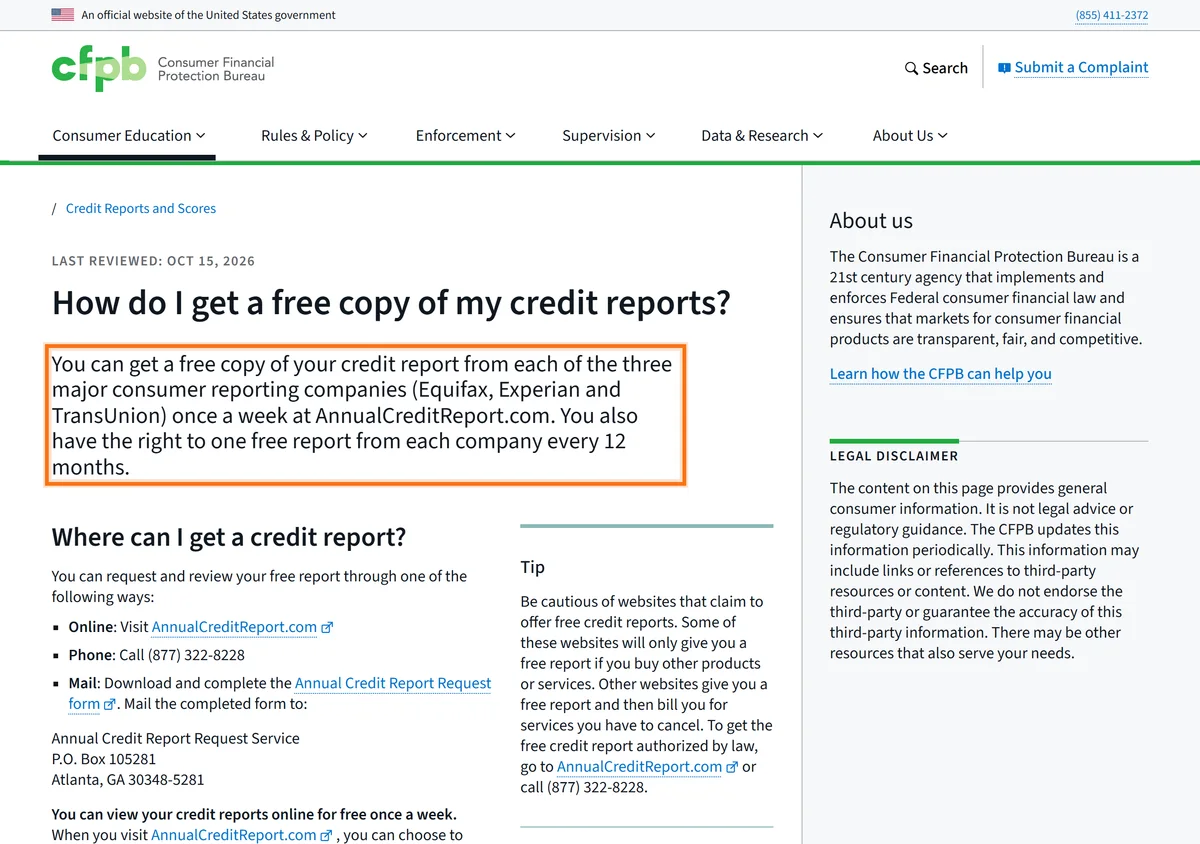
Start with what a lender will see. You can get your credit reports from Equifax, Experian and TransUnion for free, once a week, at AnnualCreditReport.com. That is the official site. Many "free score" sites try to sell you something.
Then work through this list, in this order:
- Look for mistakes. Accounts you don't recognize, late payments you made on time, debts listed twice, balances that are out of date. Dispute errors with the credit bureau and keep copies of your proof.
- Bring card balances down. How much of your card limits you use weighs heavily on your score. Paying a card from nearly full to well under half often helps faster than anything else.
- Pay every bill on time from here on. One new late payment can undo months of progress. Set up automatic minimum payments if it helps.
- Don't close old cards. Older accounts help your history. A card you rarely use can stay open.
- Don't open new credit. No new car, furniture financing or store cards while you are getting ready to buy.
Before you spend savings on paying down debt, talk with me. Sometimes that money does more as your down payment or closing costs, and sometimes paying one card down is what moves you over 620. I would rather run both numbers with you than guess. A score that moves a bracket can also open the door to down payment assistance in Dallas–Fort Worth, since those programs carry their own credit rules.
Not sure whether to buy now or fix your credit first? I'll look at your situation on a short call, with no credit pull.
Book 15 minutes with CraigI'm a first-time buyer with thin credit. Can I still buy?
Often, yes. A thin file means you have few accounts or a short history, not that you have bad credit. It is common for younger buyers, people who have always paid cash and people new to the country.
Here is how I look at a thin file:
- Do you have a score at all? If you have one or two accounts with some history, you may already have a usable score. Check your reports first.
- What else shows you pay on time? Some loan programs and lenders can consider other payment history, such as rent or utilities, when there is not enough credit. What they accept, and in what form, varies, so tell me what records you have before you start collecting them.
- Should you build credit first? If you have months before you want to buy, one card used lightly and paid in full each month can build a score. I'd rather you start that early than open several accounts right before applying.
A thin file pairs well with programs made for first-time buyers. My first-time home buyer loans compare FHA, conventional, VA and down payment help side by side, and my first-time home buyer guide for Dallas–Fort Worth covers every step from preapproval to keys.
What if the bank says my credit score is too low?
Ask what exactly the problem is. A bank's "no" usually comes from one of three places: the program's rule, that bank's own overlay, or something else in the file such as debt or income. Only the first one applies everywhere. The second changes from lender to lender, and the third can often be fixed or structured differently.
Because I work with multiple lenders, a "no" from one bank is often not the final answer. A few real examples from my closings:
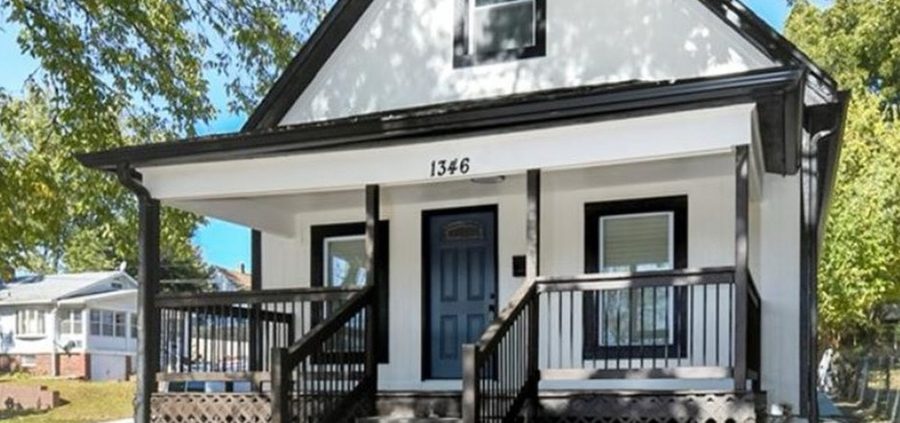
- Told they wouldn't qualify, Kansas City, KS. These buyers had been told no. We got them approved for a renovated home and closed early to fit their schedule, in 15 days. That home is the photo at the top of this page.
- A second opinion that paid off, Dallas. A VA buyer came in already preapproved elsewhere and wanted another look. We restructured the deal and got him a better one.
- A Realtor partner's client. Craig Houston wrote that his client's previous lender could only qualify him to a certain purchase price, and I was able to land him with a lender who could break through that barrier.
Every file is different, and results are not guaranteed. But if one bank has turned you down, it is worth a second look before you put your search on hold. You can read more stories like these on my recent closings page, and my guide to a mortgage broker vs a bank in Dallas explains why the answer can differ.
Why work with Craig on a credit question?

When your score is close to a line, the lender you choose matters as much as the number. Here is what you get:
- Many lenders, one point of contact. I'm a broker at Edge Home Finance, so I compare lenders and programs and take your file to the one whose rules fit it.
- One person from first call to closing. No call center and no hand-offs. You get me, the person who works your file.
- Weekly updates to you and your agent until the file is clear to close. Most loans close in about 21 to 30 days.
- A Navy officer veteran who has used his own VA loan in more than one state, and works with first-time buyers, teachers, physicians and investors too.
- 5.0 stars from 28 reviews from buyers, homeowners and Realtor partners. Risee S., buying a first home, wrote: "My questions, my uncertainties, were all answered right away."
You can read more about me, see the loans I do on my loan options page, or see what I say about each city on my Dallas–Fort Worth page. If you are ready, apply online and get preapproved, or call me at 816-679-8939. Not ready yet? Book a 15-minute call and we will work out what your score needs, if anything, before you start touring homes.
Questions buyers ask Craig
What is the lowest credit score to buy a house in Texas?
Is a 600 credit score good enough to buy a house in Dallas?
Do I need a 620 score for a conventional loan?
What credit score do I need for a VA loan?
Does a preapproval hurt my credit score?
How long does it take to raise my credit score?
Does the first call with Craig check my credit?
Educational information, not a loan offer or commitment to lend. Programs, rates and guidelines change and depend on the lender and your full file; ask Craig for current terms. Craig Scott NMLS #2650008, Edge Home Finance LLC NMLS #891464. Equal Housing Opportunity.