
VA loan or conventional loan for a Dallas–Fort Worth home: the side-by-side math

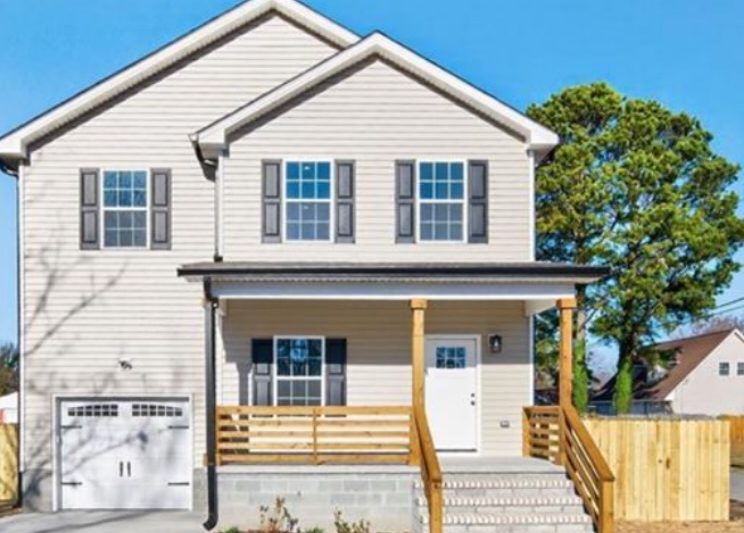
For most eligible veterans and service members buying in Dallas–Fort Worth with less than 20% down, a VA loan costs less: $0 down, no monthly mortgage insurance, and a one-time funding fee that a service-connected disability rating usually waives. Conventional can win when you put 20% or more down, want to keep your VA entitlement free for a later home, or are buying a second home or a rental. I price both for your file on the same day.
Key takeaways
- Under 20% down, VA usually beats conventional: no monthly mortgage insurance and no down payment for eligible borrowers.
- The VA funding fee is a one-time cost, usually financed. Veterans with a service-connected disability rating are usually exempt.
- Conventional with 20% down has no funding fee and no PMI, so the gap narrows to rate and closing costs.
- You can often use VA again while keeping your first VA home (second-tier entitlement).
- A married buyer whose spouse is not a veteran can still use VA; the spouse's income can count.
Is a VA loan always better than a conventional loan?
No, but it is the better deal more often than people think. I am a Navy veteran and I have used my own VA loan more than once, in more than one state, so I am biased toward the benefit. That is exactly why I run the other side too. Every VA buyer I work with sees the conventional option next to it, including the one I do not recommend, so you can see why.
The two loans differ in four places that move real money:
- Down payment. VA allows $0 down for eligible borrowers. Conventional programs start at 3% down on some loans, and many buyers put 5% to 20% down.
- Mortgage insurance. VA has none. Conventional with less than 20% down carries private mortgage insurance (PMI) every month until you reach enough equity to remove it.
- Upfront fee. VA has a one-time funding fee, usually rolled into the loan. Conventional has no funding fee.
- Who and what it covers. VA is for eligible veterans, active duty, Guard and Reserve members and eligible surviving spouses, on a home you will live in. Conventional is open to anyone who qualifies, on a primary home, a second home or an investment property.
Everything else, like the rate, lender fees and how your income is read, varies by lender. That is why I compare both loans with several lenders.
The side-by-side math on a $350,000 DFW home
Here is one simple example: a $350,000 home, about what a lot of my buyers look at in places like Duncanville, South Dallas, Carrollton or the Fort Worth side of the metroplex. I am using the same illustration numbers my payment calculator uses: a 2.15% VA funding fee for first use, and conventional mortgage insurance estimated at about 0.5% of the loan per year under 20% down. These are not quotes. Fees and MI vary with your credit, down payment and lender, and I quote them for your file.
What the table shows
| Item | VA, $0 down | VA, $0 down, disability rating | Conventional, 5% down | Conventional, 20% down |
|---|---|---|---|---|
| Cash for down payment | $0 | $0 | $17,500 | $70,000 |
| Upfront VA funding fee (2.15% first use, financed) | $7,525 | $0 (usually exempt) | None | None |
| Loan amount | $357,525 | $350,000 | $332,500 | $280,000 |
| Monthly mortgage insurance (about 0.5% a year under 20% down) | $0 | $0 | About $139 a month, until removed | $0 |
| Property taxes at about 2% of value | About $583 a month | About $583 a month, before any Texas disabled-veteran exemption | About $583 a month | About $583 a month |
| Can it be used for a rental or second home? | No, primary residence only | No, primary residence only | Yes | Yes |
How to read it: compare the rows, not just the payment. VA keeps $17,500 to $70,000 in your bank and skips monthly MI, at the cost of a one-time fee that is usually financed; a disability rating usually removes that fee too. Conventional with 20% down has no fee and no MI, but it ties up a lot of cash. Rates are left out on purpose: they change daily, and I quote both loans for your file on the same day.
At 5% down the conventional buyer is paying MI every month and has also written a $17,500 check. The VA buyer kept that cash for reserves, furniture, or moving costs from a PCS. On a disability-rated file, the $7,525 fee usually disappears too. You can try your own price with my mortgage payment calculator, which switches between VA, conventional and FHA.
For everything you pay at the table on either loan, my guide to closing costs in Texas breaks it down line by line.
Funding fee vs PMI: which costs more?
Buyers ask me this one more than any other. The answer depends on how long you keep the loan and how much you put down.
- The VA funding fee is paid once. It is set by the VA as a percentage of the loan. It is lower when you put money down and higher when you use the benefit again after your first time. You can pay it at closing or finance it, and most of my buyers finance it.
- PMI is paid every month. It is priced by the insurer from your credit score and down payment. It can be removed once you build enough equity, through payments or rising value.
In the example above, about $139 a month of MI adds up to roughly the size of the funding fee in four to five years. If you expect to stay longer than that, or your credit makes MI more expensive than my 0.5% illustration, VA usually comes out ahead on cost alone. If you plan to move fast and can put real money down, conventional can close the gap. A down payment on a VA loan lowers the fee; I check the current VA chart for your case.
Disabled veterans: the fee usually goes away
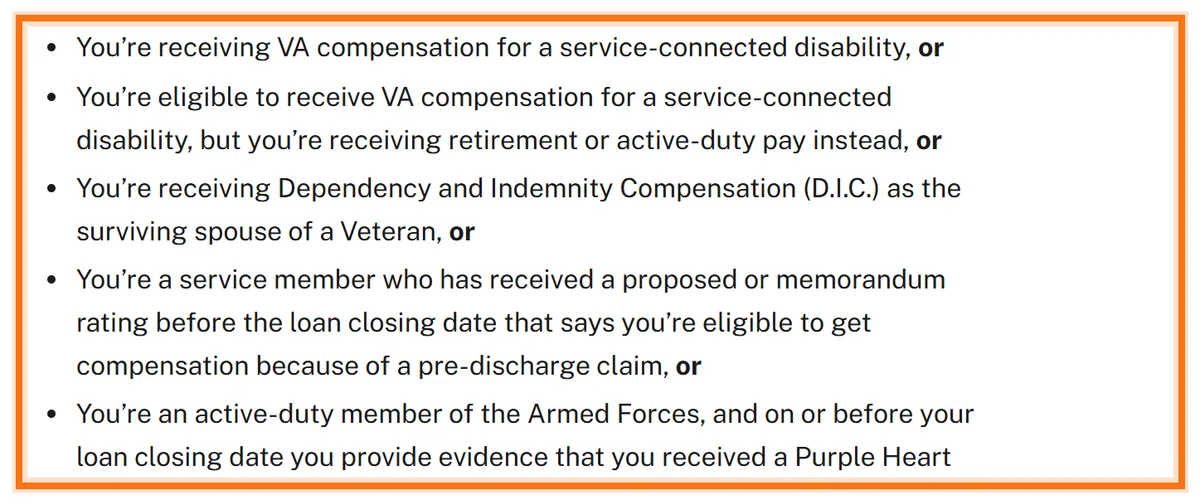
If you receive VA compensation for a service-connected disability, you are usually exempt from the funding fee. That can save thousands at closing. The VA's own page lists who is exempt, including surviving spouses receiving Dependency and Indemnity Compensation and some service members with a pre-discharge rating.
Texas adds a second benefit for disabled veterans: partial property tax exemptions by VA disability rating, and veterans rated 100% can be fully exempt on their home. You file with your county appraisal district after you move in. That exemption applies whichever loan you use, but it changes the monthly budget, so I build it into the plan.
When does conventional with 20% down beat VA?
I tell buyers to look hard at conventional in these cases:
- You have 20% or more to put down and want to. No PMI, no funding fee. The decision comes down to rate and lender fees, which I compare side by side on Loan Estimates from the same day. My guide on how to compare mortgage rates and Loan Estimates in Dallas shows what to line up.
- You want to keep your VA entitlement free. If you expect orders, or plan to keep this home as a rental and buy your next one with VA, leaving the entitlement untouched can be worth more than the savings today.
- The home is not your primary residence. VA is for a home you live in. A lake house or a pure rental needs a different loan. My guide to investment property loans in Dallas–Fort Worth covers those.
- The house needs work the VA appraisal will flag. VA homes must meet minimum property requirements. A true fixer-upper can be easier on another loan, such as a renovation loan like the FHA 203(k).
- You are using VA again with a big down payment. The funding fee is higher on later use, and with a large down payment the conventional loan may cost less overall. I run both.
Notice what is not on that list: "sellers do not like VA." That one is mostly a myth, and I cover it below.
Using VA a second time, or keeping your first VA home
Your VA benefit is not one and done. Entitlement can be reused, and in many cases you can buy again while you still have a VA loan on another home. This is called second-tier entitlement, and it is one of the reasons VA often beats conventional for military families who move.
A real example: in Aledo, west of Fort Worth, I closed a VA purchase for buyers who still had a VA loan on a home in Missouri. With the right structure, the benefit kept working and they kept the first house. On a second VA loan, how much entitlement is tied up and the price of the new home decide whether any down payment comes into play. I work that out before you make an offer, not after.
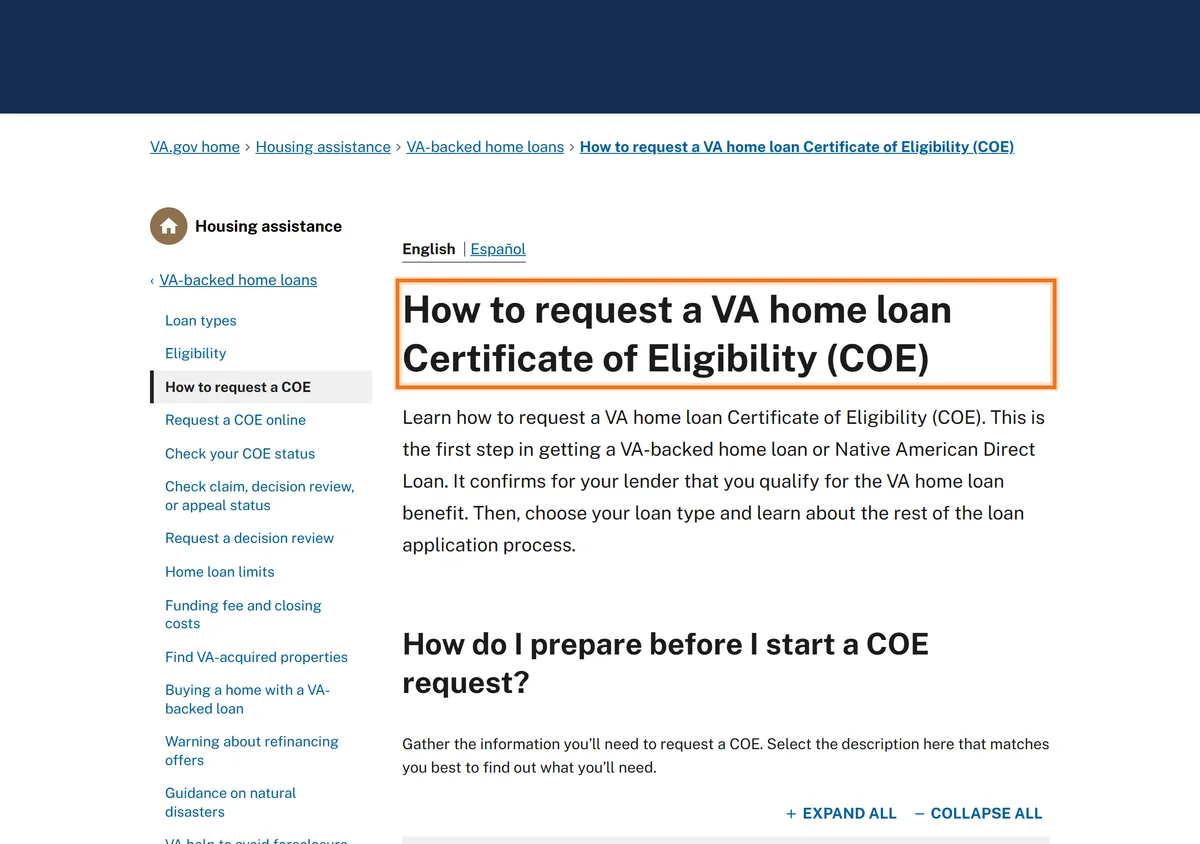
Entitlement can also be restored. In Brownsville, I restored a veteran's VA entitlement and lowered his rate with $0 out of pocket, in under two weeks. If you used VA years ago and are not sure what you have left, I can pull your Certificate of Eligibility (COE) in most cases with your basic service information. You can also request it yourself on va.gov.
If this is your first time, start with my step-by-step guide to a first VA loan in Dallas–Fort Worth.
Want your VA and conventional numbers side by side for the price range you are shopping?
Book 15 minutes with CraigVA appraisals and multiple offers in DFW
A good DFW house in a good school zone can still draw several offers, and buyers worry a VA offer will lose. Here is how the appraisal works.
- VA appraisal. The VA assigns the appraiser. The appraisal checks value and the VA minimum property requirements, which are about safety and soundness: things like a working roof, heat and safe access.
- Tidewater. If the appraiser expects the value to come in under the contract price, the lender gets notice and a short window to send comparable sales that support the price. I handle Tidewater notices and appraisal reconsiderations as part of the process. I did it for buyers who bought while deployed at sea and came home to their own front door.
- Conventional appraisals can come in low too. A low value is a price problem on either loan. It is not a VA problem.
To keep a VA offer competitive, I issue a preapproval only after reviewing income, assets and credit, so the letter holds. I also keep the listing agent informed. My guide to mortgage preapproval in Dallas–Fort Worth explains what goes into a letter that sellers trust.
Do sellers in Dallas–Fort Worth avoid VA offers?
Some listing agents picture VA loans as slow and picky. A well-run VA file is neither. My fastest recent purchase closed in 9 days. In Houston, a VA buyer on a tight timeline closed in 9 days with a no-cost temporary buydown that put his rate in the 5s for the first year, plus a real 3–5 year plan for the home.
In Fort Worth, a builder's in-house lender could not read a buyer's active-duty and reservist pay. I could. We secured full builder concessions and he walked in with $25,000 in equity on day one, just over three weeks from contract. Sellers and builders care about one thing: will this loan close on time? A strong VA file closes. Realtors who work with me get weekly updates until clear to close, so nobody is guessing. If you are an agent reading this, my Realtor partner page explains how I keep VA offers competitive.
One more DFW example: in Dallas, a VA buyer came to me already preapproved elsewhere and wanted a second look. We restructured the deal and got him a better one. A second opinion costs you a phone call. Shopping more than one lender is the point of a broker, and my guide on mortgage broker vs bank in Dallas explains the difference.
Which loan if my spouse is not a veteran?
Use the VA loan if you are the eligible one. A married couple can buy with VA when only one spouse is a veteran. The loan uses the veteran's entitlement, and the non-veteran spouse can be on the loan, with their income and credit counted. You still get $0 down and no monthly mortgage insurance.
A few points I walk couples through:
- If you are buying with someone who is not your spouse and not a veteran, the math changes, and conventional may fit better. I run both.
- An eligible surviving spouse can have VA eligibility in their own right. A spouse of a living veteran does not use VA without the veteran.
Credit matters on both loans. If either of you is working on a score, my guide on the credit score you need to buy a house in Dallas covers what lenders look for and how to move it.
Local notes: Fort Worth, Dallas and the suburbs
Fort Worth is home to Naval Air Station Joint Reserve Base Fort Worth, so many of my VA buyers there are on orders or are reservists. Their pay stubs look different from a civilian W-2, and that is where a lender who understands military pay matters. Out west, Aledo and Parker County have acreage and new builds where I have closed VA loans. In South Dallas, Duncanville, Carrollton and Richardson, I see a lot of buyers who qualify for VA and did not know a second VA loan was possible. In Frisco and McKinney, compare the builder's lender with an outside offer on both loans. If you want to build from the ground up, the VA one-time close construction loan covers the land, the build and the permanent loan in one closing.
Whatever the city, budget for Texas property taxes. Many DFW cities run about 2% of value a year or more, and the homestead exemption, filed after you move in, lowers the taxable value. See all the cities I work in on my Dallas–Fort Worth page.
Why work with me on a VA vs conventional decision
I am a Naval Academy graduate and a Navy officer veteran. I have used my VA loan multiple times in multiple states, so I know PCS orders, second-tier entitlement and underwriters who do not get it from the buyer's side of the table. As a broker at Edge Home Finance, I shop your loan with multiple lenders, which matters most on exactly this question: one lender's VA pricing and another lender's conventional pricing can tell very different stories.
- You work with me from the first call to the closing table, not a call center.
- Every option compared, including the ones I do not recommend, so you see why.
- A weekly update to you and your agent until the file is clear to close.
- 5.0 stars from 28 reviews on my review page.
- Recent VA closings close to home: Aledo, Fort Worth and Dallas, plus a refinance in Sachse that closed in 9 days. You can read them on my recent closings page.
When you are ready, see my page as a VA loan lender in Dallas, or apply online in about ten minutes. I will run the VA and conventional numbers side by side before you tour a single house. You can also call or text me or book a 15-minute call. No credit pull for the first conversation.
Questions buyers ask Craig
Is the VA interest rate always lower than a conventional rate?
Can I remove PMI on a conventional loan later?
Do I lose my VA benefit if I use conventional now?
Can I refinance from conventional to VA?
I got a disability rating after closing. Can I get the funding fee back?
Can I use VA for a duplex in Garland or Fort Worth?
How long does a VA loan take to close compared with conventional?
Educational information, not a loan offer or commitment to lend. Programs, rates and guidelines change and depend on the lender and your full file; ask Craig for current terms. Craig Scott NMLS #2650008, Edge Home Finance LLC NMLS #891464. Equal Housing Opportunity.

