Mortgage Broker vs Bank, Online Lender or Credit Union in Dallas–Fort Worth: Who Gets You the Better Loan?

No single type of lender always wins. A bank, credit union or online lender can only offer its own loans and its own rules. A mortgage broker in Dallas, like me, can price the same loan with several lenders and send your file to the one that fits it. That matters most when your file is unusual or someone already said no. To know who is better for you, compare official Loan Estimates for the same loan.
Key takeaways
- A bank, credit union or online lender sells its own loans. A broker shops your file with multiple lenders.
- A broker is not automatically cheaper or more expensive. The Loan Estimate shows the real cost, so compare those, not ads.
- Every lender must send a Loan Estimate within 3 business days of your application, and the origination charges you pay are listed on it.
- A no from a bank or a builder’s lender is one lender’s answer. A broker can take the same file to a lender with different rules.
- Check any loan officer’s license on NMLS Consumer Access before you hand over your documents. Mine is NMLS #2650008.
What is the difference between a mortgage broker, a bank, an online lender and a credit union?
All four can get you a home loan in Dallas–Fort Worth. The difference is whose loans they can offer you and who you talk to along the way.
- A bank lends its own money, or sells loans under its own guidelines. Its loan officer can offer that bank’s menu and nothing else. If your file does not fit that menu, the answer is no or a smaller loan.
- A credit union works much like a bank, but you usually need to be a member. Some credit unions keep loans on their own books, some sell them. Either way, you get that credit union’s programs and that credit union’s rules.
- An online lender is a mortgage company that does most of its business through a website and a call center. You apply on a screen, and the person who answers your call may change from week to week. It still offers only its own loans.
- A mortgage broker does not lend the money. A licensed broker takes your application and prices it with several wholesale lenders, then places it with the one that fits your file. You keep one point of contact while the lender behind the loan can change.
I am a mortgage broker in Dallas, working at Edge Home Finance. In practice that means I can compare lenders for a VA buyer in Fort Worth, a first-time buyer in Arlington and a doctor moving to Frisco, instead of fitting all three into one bank’s rules. The loan types themselves do not change. A 30-year fixed mortgage, an FHA loan or a VA loan follows the same program rules wherever you get it. What changes is the price, the extra rules each lender adds on top, and how fast and how well the file is handled.
What the table shows
| Question | Mortgage broker | Bank | Credit union | Online lender |
|---|---|---|---|---|
| Whose loans can they offer? | Several lenders’ loans | The bank’s own | The credit union’s own | The company’s own |
| Who must I be to apply? | Anyone | Anyone; some perks for existing customers | Usually a member | Anyone |
| If they say no, what then? | The file can go to a different lender | Start over somewhere else | Start over somewhere else | Start over somewhere else |
| Who do I talk to? | Varies; with me, the same person from first call to closing | Varies by bank | Varies by credit union | Often a call center or app |
| Where do I see what I pay them? | Loan Estimate, page 2, Section A | Loan Estimate, page 2, Section A | Loan Estimate, page 2, Section A | Loan Estimate, page 2, Section A |
| Usually a good fit when… | Your file is unusual, you want options, or someone already said no | Your file is simple and the bank prices well | You are a member and its program fits | Your file is simple and you are fine on your own |
How to read it: the last two rows matter most. Every one of these lenders has to give you the same federal Loan Estimate form, so you can compare them fairly. A broker’s edge is having more than one door to knock on, not a promise of a lower price.
How does a mortgage broker get paid, and is a broker more expensive?
This is the question I hear most, and it deserves a straight answer. A mortgage broker is paid either by the lender or by you, not both on the same loan. Federal loan originator compensation rules require that. When the lender pays, the cost is built into the rate you are offered. When you pay, it shows up as an origination charge.
Banks, credit unions and online lenders are paid too, through their rate and their own fees. Nobody works your loan for free. The real question is “what is my total cost for this loan, and what do I get for it.”
That is why I never say brokers are always cheaper. Sometimes your own bank prices a simple loan very well. Sometimes a lender I work with beats it. You only know by comparing the official numbers:
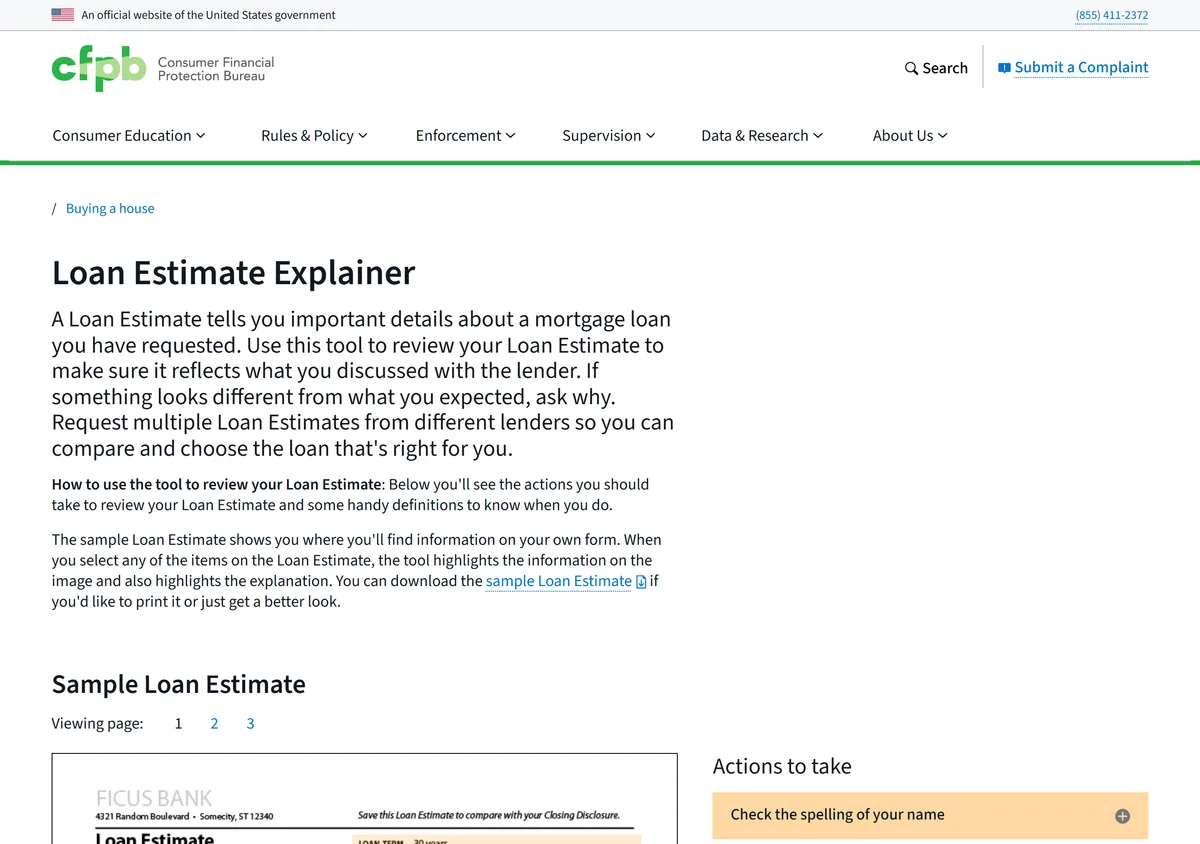
- Page 1 of the Loan Estimate: loan amount, rate, monthly principal and interest, and whether the rate is locked.
- Page 2, Section A, Origination Charges: what you pay the lender or broker, including any discount points.
- Page 3, “In 5 Years”: the total you will have paid in the first five years and how much went to principal. This single line is the fairest head-to-head comparison.
Every lender must send a Loan Estimate within 3 business days of your application. My guide on how to compare mortgage rates and Loan Estimates in DFW walks through each page, and the Texas closing costs guide explains the title and escrow lines that come on top.
Should a first-time buyer in DFW use a broker or a bank?
If you have strong credit, steady W-2 income, money saved for the down payment and a bank that already knows you, get a quote from that bank. It may be a good one. Then get at least one more, so you have something to hold it against.
A broker earns its keep when a first purchase has moving parts, and most first purchases do:
- Down payment help. Texas programs and some lender programs can cover part of the down payment and closing costs. Not every lender offers them. In Prairie View, TX, a program from one of my lenders covered both for a first-time buyer, with money left over to buy down the rate. See the down payment assistance guide for Dallas–Fort Worth.
- Credit in the low 600s. Many lenders look for 620 or higher, and FHA allows lower scores with a larger down payment. Each lender sets its own minimum on top of the program, so a no from one is often not the final answer. My guide on the credit score you need to buy a house in Dallas goes deeper.
- A choice between programs. FHA, conventional with 3% down, VA or USDA. A bank may only push the one it offers best. I lay them side by side, including the ones I would not pick, so you see why. The first-time home buyer loans page lists the options.
Whichever route you take, get pre-approved before you tour homes. Here is how mortgage preapproval works in DFW, and the full first-time home buyer guide for Dallas–Fort Worth covers the rest of the road to keys.
Online lender or a local broker: does local still matter?
Online lenders are convenient, and for a simple refinance that can be enough. A purchase in Dallas–Fort Worth has a deadline and an agent, a seller and a title company waiting on answers. Local details also shape the loan:
- Property taxes. Texas has no state income tax, so many DFW cities run about 2% of the home’s value a year or more. A payment quote that guesses the tax rate can be off by hundreds a month. I use the real rate for the address.
- Homestead exemption. You file with your county appraisal district after you move in. It lowers the taxable value, and it belongs in your long-term budget.
- New construction. In Frisco, McKinney and other growing suburbs, the builder will usually push its own lender. It is worth comparing that offer with an outside one before you sign.
- Texas cash-out rules. A Texas home-equity cash-out refinance is capped at 80% of the home’s value, with its own waiting periods.
- Tight timelines. Corporate moves around Legacy in Plano and PCS orders near NAS JRB Fort Worth leave little room for a slow file.
Most loans close in about 21–30 days. What makes the faster ones possible is in my guide on how fast you can close on a house in Dallas.
Credit union or mortgage broker?
If you already belong to a credit union, ask it for a quote. Membership can come with perks, and some credit unions have programs worth a look. Just treat its offer like any other:
- Ask for an official Loan Estimate, not a rate sheet or a verbal number.
- Ask whether the rate is locked, and for how many days.
- Ask who will handle your file after the application, and how you will hear about progress.
- Put its Loan Estimate next to the others and compare Section A and the “In 5 Years” line.
A credit union can only show you its own loans. If its program does not fit your file, you start over elsewhere. With a broker, the same file can go to a different lender without starting from zero.
What should you do when a bank or a builder’s lender says no?
A no from one lender is one lender’s answer, not the final word. Lenders add their own rules on top of the FHA, VA and conventional guidelines, and their underwriters read income differently. Here is what I have seen in real files:
- Fort Worth, TX. The builder’s in-house lender could not read the buyer’s active-duty and reservist pay. We could, and we secured full builder concessions. The buyer had $25,000 in equity on day one, and we closed in just over 3 weeks.
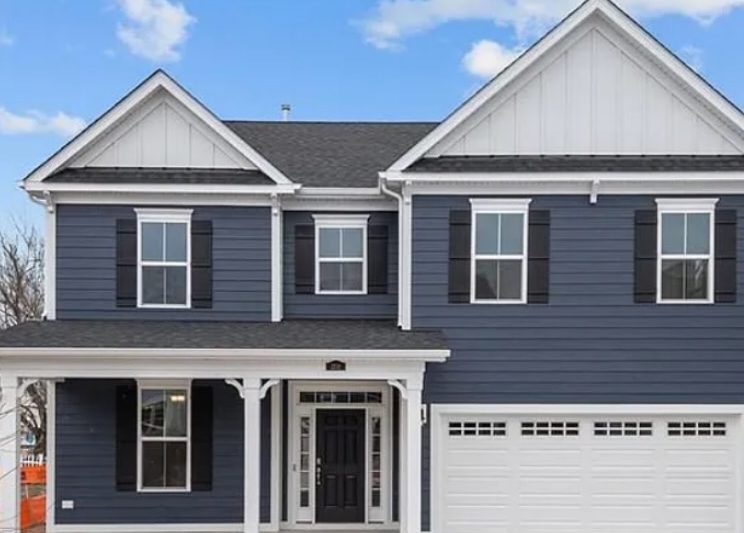
- Suffolk, VA. A Navy family on PCS orders from Chicago was turned away by the builder’s lender. They closed on the brand-new build in the photo at the top of this page.
- A capped price. One of my Realtor partners, Craig Houston, sent me a buyer whose previous lender could only qualify him up to a certain purchase price. I found a lender who could break through that barrier.
- Dallas, TX. A VA buyer came in pre-approved elsewhere and wanted a second look. We restructured the deal and got him a better one.
If you have been told no, do this next:
- Ask for the reason in writing. “Income could not be used” and “credit score below our minimum” lead to very different fixes.
- Do not apply everywhere at once. According to the CFPB, mortgage credit checks within a 45-day window count as a single inquiry, so a few second opinions in that window are fine. A dozen applications create a mess of paperwork, not a better loan.
- On a new build, ask what the incentive is really tied to. Get in writing which part of the builder’s offer depends on using the builder’s lender.
- Bring the file to a broker. I will tell you plainly whether another lender can do it and what it will take. If the honest answer is “not yet,” you get a plan to fix it.
Veterans weighing their options can read VA vs conventional loans in Dallas, and veterans who want to build can start with the VA one-time close construction loan.
Pre-approved somewhere else, or just told no? Send me the file and I will give you a straight second opinion.
Book 15 minutes with CraigHow do you check a mortgage broker’s license?
Every mortgage loan originator in the U.S. has an NMLS number, whether they work for a broker, a mortgage company, a bank or a credit union. Loan officers at mortgage companies and brokers are licensed by each state where they lend. Loan officers at banks and federally insured credit unions are registered with NMLS instead. Either way, you can look them up for free on NMLS Consumer Access.
- Get the number. Ask the loan officer for their NMLS ID and the company’s NMLS ID. They should be on the website, the email signature and the Loan Estimate.
- Search NMLS Consumer Access. Enter the number or the name, open the record and check the states where they are licensed or registered.
- Check Texas. In Texas, the Department of Savings and Mortgage Lending oversees mortgage companies and loan originators. Its Consumer Protection page links straight to the license search, and it is also where you file a complaint.
- Match the names. The company on your Loan Estimate should match the company in the record.
My own record is easy to check: Craig Scott, NMLS #2650008, with Edge Home Finance LLC, NMLS #891464.

Who is the best mortgage broker in Dallas?
The best mortgage broker in Dallas is the one who closes your file at a fair, clearly shown cost and tells you the truth along the way. Ask these questions:
- How many lenders will you price my loan with? One or two is not shopping.
- Who will I talk to after I apply? If the answer is “our processing team,” ask how you will reach a person the night before closing.
- How often will I and my agent hear from you? “When there is news” usually means silence.
- Will you show me the options you do not recommend, and why? A good broker explains the trade-offs, not only the winner.
- Have you closed loans like mine? VA with second-tier entitlement, a physician loan, a new build or self-employed income each have their own traps. If you work for yourself, see the self-employed mortgage guide.
- What is your NMLS number? Then look it up.
Why buyers and agents work with me
I am a broker at Edge Home Finance, and I built my practice around the problems I lived through myself. I am a U.S. Naval Academy graduate and a Navy officer veteran. I have used my own VA loan more than once, in more than one state, so I know what PCS orders, second-tier entitlement and underwriters who do not get it feel like from your side of the table.
- Multiple lenders, one file. I shop your loan with multiple lenders instead of one bank’s menu, and I take your file to the lender that fits it.
- One person from first call to closing. You talk to me, not a call center, by phone, text or email.
- Weekly updates to you and your agent until the file is clear to close.
- Every option compared, including the ones I do not recommend, plus a real 3–5 year plan for the home, not just a rate.
- 5.0 stars from 28 reviews on my review page, from buyers, homeowners and Realtor partners.
You can read the stories behind those reviews on my recent closings page, more about my background on the about Craig page, and what agents get from me on the Realtor partners page. If you want a real number before we talk, run your scenario in the payment calculator.

Ready to see what the lenders I work with would offer you? Book a 15-minute call, no credit pull, or start your application online in about ten minutes.
Questions buyers ask Craig
Does a mortgage broker charge more than a bank?
Can I use a broker and still get a quote from my bank?
Will I deal with the lender directly if I use a broker?
Do I have to use the builder’s lender on a new home?
Is a credit union mortgage better than a broker’s?
Can a broker help if I was pre-approved somewhere else?
Educational information, not a loan offer or commitment to lend. Programs, rates and guidelines change and depend on the lender and your full file; ask Craig for current terms. Craig Scott NMLS #2650008, Edge Home Finance LLC NMLS #891464. Equal Housing Opportunity.